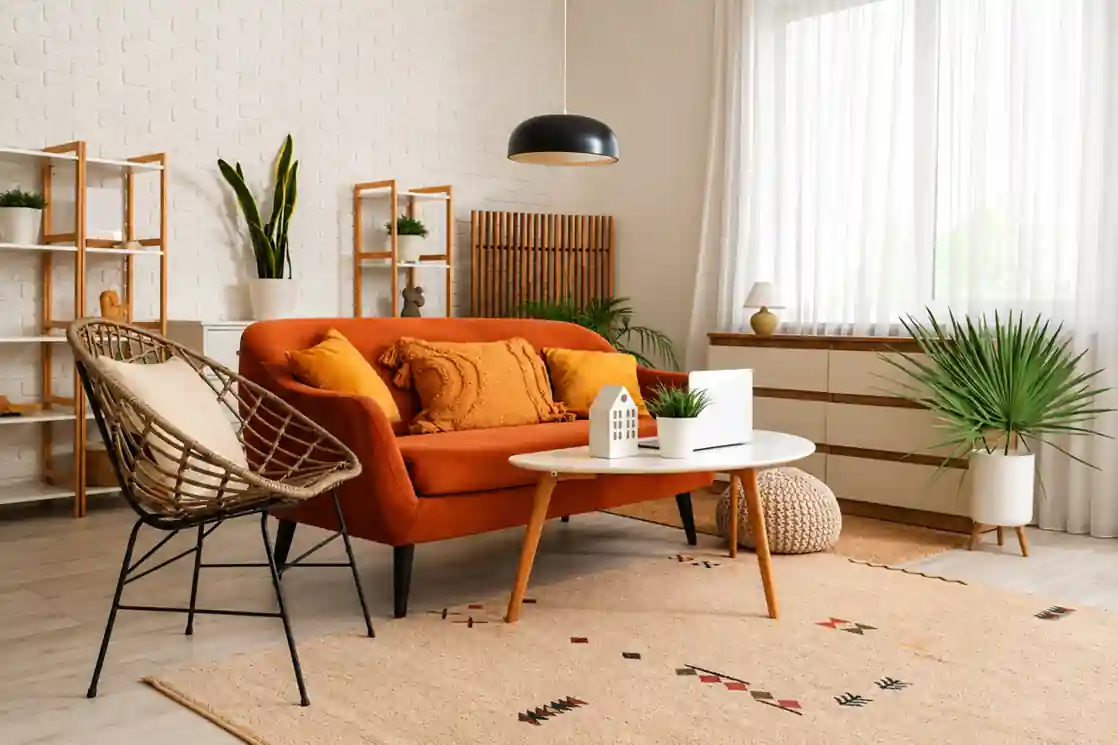
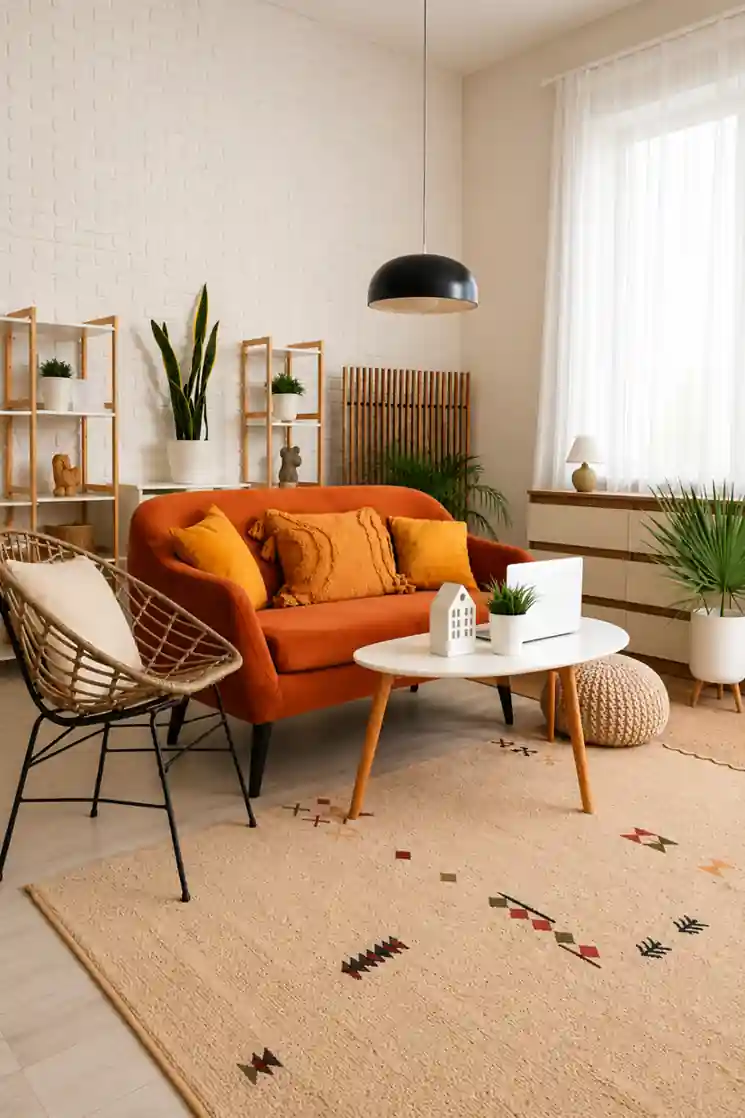



Homes that retain their character for decades often share one defining quality: a drawing room designed with restraint. Such spaces do not depend on dramatic lighting to create a mood. Their warmth comes from the materials, finishes, furniture, and décor elements themselves, allowing the room to feel grounded, elegant, and timeless rather than dated.
That is what a well-executed traditional drawing room interior achieves.
Traditional drawing room interior design is more than just about recreating a period look. It is about working with natural materials, warm tones, considered symmetry, and decorative elements that carry weight and craft.
For homeowners in Mumbai and Bangalore, this design direction also solves a particular problem. Traditional aesthetics age well. In a city where apartments change hands, families grow, and tastes evolve, a drawing room interior built on classic principles holds its value and relevance far longer than trend-driven interiors.
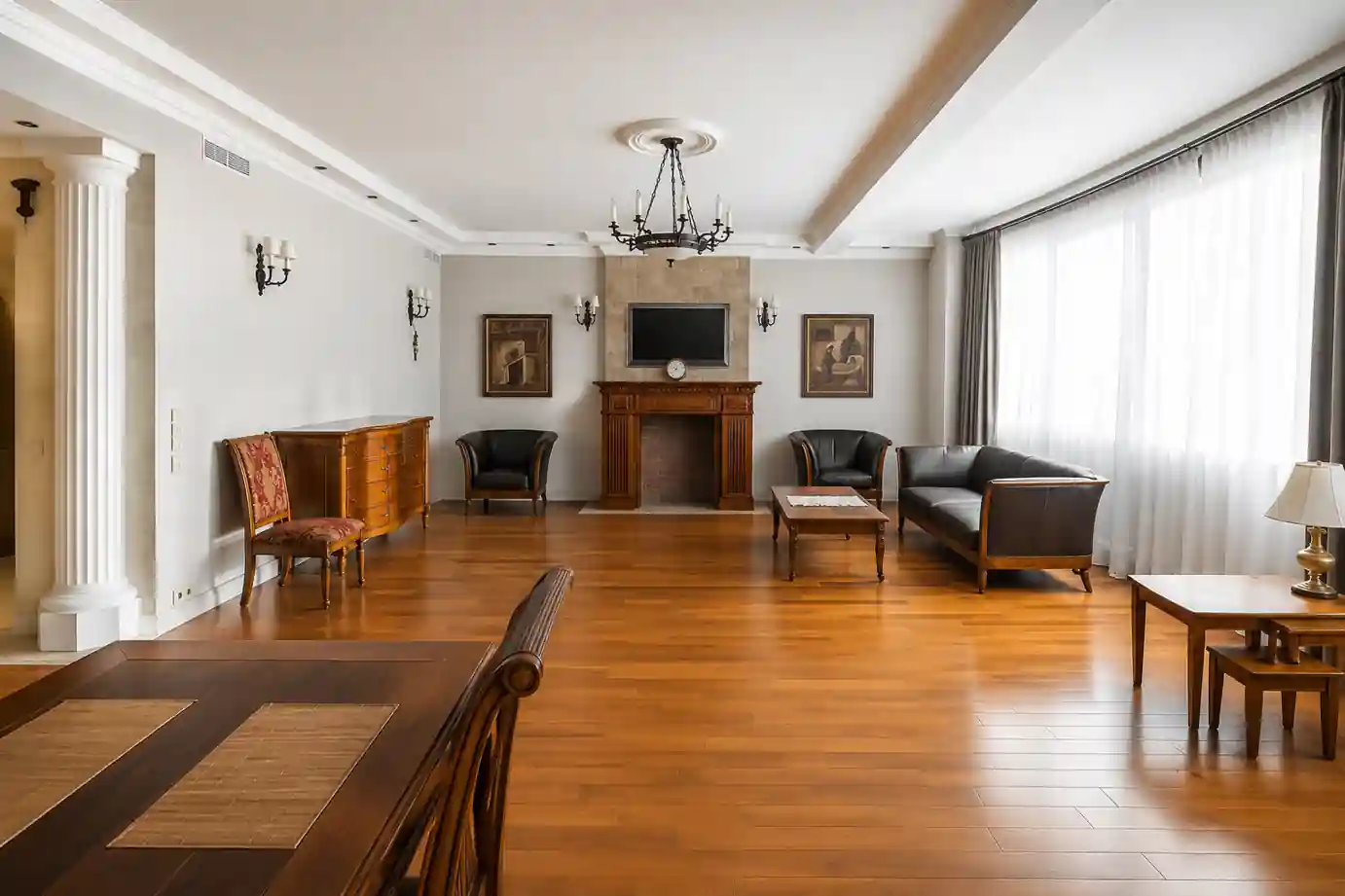
Traditional drawing rooms are anchored by substantial furniture. Solid wood frames, carved detailing, and upholstery in rich fabrics are the baseline.
Pro tip: When planning traditional drawing room interiors, avoid mixing too many wood tones. Two at most, and keep them within the same warm family.
Traditional drawing room design is built on warmth. The palette draws from a consistent range: ivory, cream, warm beige, burnt sienna, deep maroon, forest green, and gold. These are not colours chosen for visual excitement. They are chosen for their agelessness and for making a room feel inhabited rather than staged.
In Mumbai homes, drawing rooms in buildings across Dadar or Matunga often receive indirect light for most of the day. For such homes, interior designers in Mumbai recommend warm undertones for the drawing room’s wall colours.
Walls in off-white or warm ivory give the furniture room to perform. A single accent wall in a deeper tone, maroon, olive, or a warm charcoal, can anchor the room without competing with the pieces in it.
Every traditional drawing room interior needs two or three pieces that carry genuine visual weight. Not a room full of competing focal points, but a considered hierarchy.
For instance, a chandelier or statement pendant is the most reliable of these. It establishes the ceiling as a designed surface and draws the eye upward, which adds perceived height to the room. In apartments with standard ceiling heights, a flush-mount or semi-flush traditional fitting achieves the same effect without overwhelming the proportions.
You can also use a traditional rug to define the seating zone and bring pattern and texture into a room that might otherwise feel flat. Persian, Kashmiri, and Dhurrie rugs in deep jewel tones or geometric patterns all work within this design vocabulary.
Artwork and antique accents also help complete the picture. A large framed painting above the sofa, a pair of brass lamps on the console, and an inherited piece displayed deliberately rather than stored away. These are the elements that give a traditional room its sense of history.
Paint alone rarely does enough in a traditional drawing room interior. The walls need texture or architectural detail to hold their own against substantial furniture.
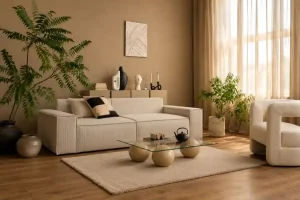
A drawing room is not a museum. In most Mumbai and Bangalore homes, it is the room that hosts guests, absorbs daily family life, and holds the television alongside the inherited silverware.
Traditional drawing room interior ideas need to account for this multipurpose usage. Upholstery should be in fabrics that can be cleaned. Storage should be built in so that everyday objects have somewhere to go. The television, if it is in the room, should be integrated into the wall unit rather than sitting on a separate stand that disrupts the composition.
This is where Bonito Designs’ Life Design approach matters. Our team works through how a household actually uses its drawing room before making any design decisions. Before we begin brainstorming how to decorate a drawing room, we explore and understand the specific family’s needs, routines, and guests.
The most common mistake in traditional drawing room interior design is treating richness as a matter of quantity. More objects, patterns, and details should not make a room feel heavy; rather, they should make it feel elegant. Restraint is what separates a well-designed traditional room from a cluttered one.
If you are planning a traditional drawing room in your Mumbai or Bangalore home and want the result to feel composed rather than assembled, book a consultation with Bonito Designs today.
Traditional drawing room interior design focuses on natural materials, warm colours, symmetry, crafted furniture, and decorative details that create a timeless, elegant space.
Solid wood sofas, carved coffee tables, upholstered armchairs, display cabinets, and symmetrical seating arrangements work best for a traditional drawing room.
Warm ivory, cream, beige, burnt sienna, deep maroon, forest green, olive, charcoal, and gold are suitable colours for traditional drawing room interiors.
Use a few strong statement pieces, limit wood tones, balance patterns carefully, and avoid overcrowding the room with too many decorative objects.
Traditional design works well in Mumbai and Bangalore homes because it ages gracefully, adapts to changing family needs, and retains visual warmth across different lighting and apartment layouts.